
Best Masks for Mold Removal: N95, P100 and Full-Face Respirators
Published by Harmony Lab & Safety Supplies on Apr 02, 2026
Updated November 2026
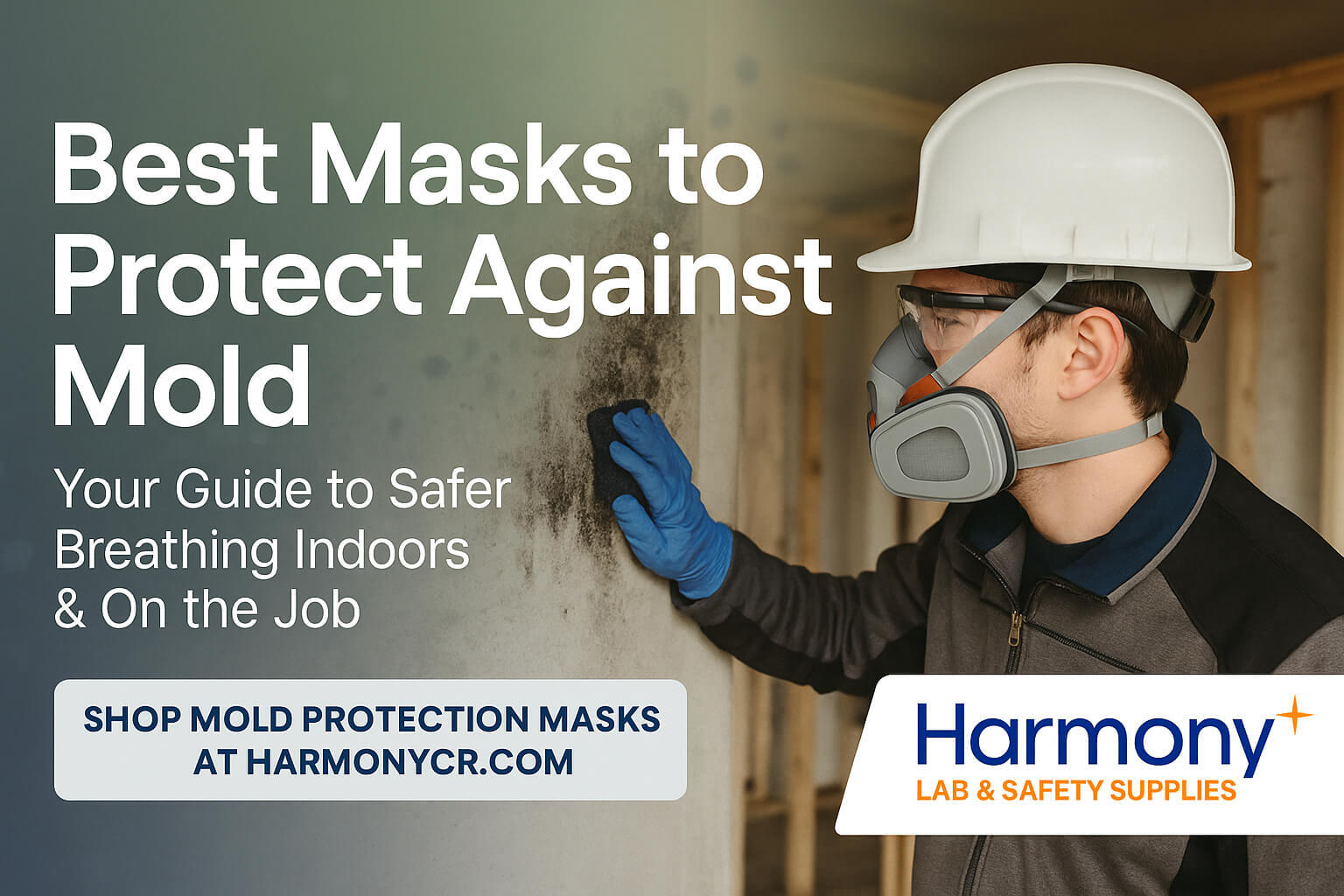
Choosing the Best Mask to Protect Against Mold
Being around mold can be very bad for your health, especially if you have allergies, asthma, or a weak immune system. To breathe in fewer harmful spores, you need to wear the right protective mask. This guide tells you about the dangers of mold, the different types of masks, and the best respirators to use while cleaning up and getting rid of mold.
Understanding Mold and Its Health Risks
Mold is a type of fungus that grows well in wet places and sends tiny spores into the air. Breathing in these spores can cause allergies, breathing problems, and health problems that last a long time. When cleaning, removing, or working near mold, it's very important to wear the right mask.
Why a Mask is Necessary for Mold Protection
A good mask or respirator stops mold spores from getting into your lungs by acting as a barrier. This is very important when getting rid of mold, tearing down buildings, or doing jobs where mold is common because of the high humidity. Shop for mold removal supplies in bulk and get them shipped quickly.
Types of Masks and Their Effectiveness Against Mold
Different masks offer varying levels of protection:
- Cloth/Surgical Masks: Minimal protection; loose fit and low filtration efficiency.
- N95 Respirators: Filter at least 95% of airborne particles, including mold spores. A solid choice for light to moderate mold exposure.
- P100 Respirators: Filter 99.97% of airborne particles. Highly recommended for heavy mold remediation.
- Full-Face Respirators: Offer P100 filtration plus full eye protection, ideal for professional mold remediation.
Mask Comparison Chart
| Mask Type | Filtration Efficiency | Eye Protection | Ideal Use Case |
|---|---|---|---|
| Cloth/Surgical Mask | Low | No | Low-risk, everyday use |
| N95 Respirator | 95% | No | Moderate mold exposure |
| P100 Respirator | 99.97% | No | Heavy mold remediation |
| Full-Face Respirator | 99.97% | Yes | Professional remediation |
Best Mask for Mold by Job Size
Match the respirator to the size of the job. All of our picks are NIOSH-approved respirators; click through for sizes, pack quantities and pricing.
| Job | What to wear | Our picks |
|---|---|---|
| Small area, under about 10 sq ft (a shower corner, a window sill) | EPA's minimum is an N95 respirator, plus gloves and goggles | 3M 8511 N95 with valve (10/box), Moldex 2700 N95 with valve (10/box), or for more filtration, the 3M 8293 disposable P100 (sold each) |
| Bigger cleanup or a strong musty smell | Reusable half mask with P100 filters. A P100 filter with nuisance-level organic vapor relief helps with odor | Honeywell North Premium P100 half mask kit, 3M 7500 half face with P100 filters, 3M 6000 half face with P100 filters, and 3M 2097 P100 filters with nuisance OV relief |
| Large areas or professional remediation | Full-face respirator with P100 filters, for eye protection too | 3M 6000 Series full face respirator with 3M 2091 P100 filters (case) or 3M 2097 P100 filters (2-pack), or the 3M 68097 mold remediation kit (full face respirator with P100 filters; check stock, as it is restocking) |
| Disposable with odor relief | N95 with nuisance-level organic vapor relief | Moldex 2800 N95 (10/box) |
Need masks for a crew? Every product page has an Add to Quote button for volume pricing.
Important Features to Look for in a Mold Protection Mask
- Proper Fit and Seal: Prevents unfiltered air leakage.
- NIOSH Approval: Confirms quality and filtration standards.
- High Filter Efficiency: Higher percentages block more particles.
- Comfort and Breathability: Essential for prolonged use.
Safety Checklist for Mold Cleanup
- NIOSH-approved respirator (N95, P100, or full-face)
- Protective gloves
- Disposable coveralls
- Eye protection
- Shoe covers
Tips for Using and Maintaining Your Mold Protection Mask
Always follow the manufacturer’s instructions for fitting and use. For reusable respirators, clean and maintain per guidelines to ensure performance. Replace disposable masks after recommended use or when breathing becomes difficult.
FAQ
Can a regular dust mask protect against mold?
No. Cloth and dust masks do not filter out mold spores effectively. Use at least an N95 respirator.
Is an N95 enough for black mold?
For a small area, under about 10 square feet, EPA lists an N95 respirator as the minimum, along with gloves and goggles. For larger areas, EPA calls for more protection based on the size of the job and how much exposure you'll have. Many people step up to a P100 half mask or a full-face respirator (EPA).
How long can I wear a mold mask before replacing it?
Disposable masks should be replaced after one work session or sooner if they become damp, dirty, or damaged.
Comparing respirators? Our guide to N95 vs KN95 masks explains the difference in approval and how to spot a fake N95.
Conclusion
Mold exposure can cause serious health issues, but the right mask provides effective protection. Whether you choose an N95, P100, or full-face respirator, ensure it fits well, meets NIOSH standards, and suits your task.
Protect Yourself from Mold Exposure
Shop NIOSH-approved respirators and PPE from Harmony Lab & Safety Supplies.
Shop Respirators Now