
Choosing the Perfect Gloves for Handling Acetone
Published by Harmony Lab & Safety Supplies on Feb 09, 2025
Updated October 2026 · Reviewed by Jeff B., Safety Products Specialist
The best gloves for acetone are butyl rubber gloves. Acetone is a ketone solvent, and it breaks down nitrile, the material most disposable gloves are made of, within minutes. OSHA's glove selection chart rates butyl "very good" against acetone and other ketones such as MEK and MIBK, and rates nitrile "poor".
Gloves for Handling Acetone
When working with acetone, protect your hands from both splashes and longer contact. Acetone dries and irritates skin and is absorbed through it, and it is highly flammable, so gloves are only part of safe handling alongside ventilation and eye protection.
Glove material matters more than anything else. Here is how common materials compare for acetone, based on OSHA's glove selection chart:
| Glove material | Acetone | MEK | Notes |
|---|---|---|---|
| Butyl rubber | Very good | Very good | The standard choice for ketones and esters |
| Natural rubber (latex) | Very good | Good | Thin disposable latex gives only brief splash protection; latex allergy risk |
| Neoprene | Good | Good | A fallback when butyl isn't available |
| Nitrile | Poor | Poor | Not recommended for acetone, even thick nitrile |
Vinyl (PVC) gloves are not on the OSHA chart, but glove makers generally rate them poor for ketones, so avoid them for acetone too.
Acetone-Resistant Gloves We Stock
- North B131 Butyl Glove, Smooth, 13 mil: unsupported butyl, 11 in long, smooth finish that rinses clean. Sizes S to XL, sold by the pair.
- North B131R Butyl Glove, Grip-Saf Rough Finish, 13 mil: the same butyl glove with a textured grip for wet containers and tools. Sizes S to XL, sold by the pair.
Both are rated to EN ISO 374-1 Type A, which includes testing against acetone. See all chemical-resistant gloves.
Acetone Safety Gloves: Thickness, Fit and Grip
For the same material, a thicker glove takes longer for acetone to get through, but material comes first: a thick nitrile glove still fails quickly, while a 13 mil butyl glove resists acetone for far longer. Check the manufacturer's breakthrough time for the job you're doing.
- Splash or brief contact (wiping, small transfers): butyl gloves, changed if soaked.
- Extended contact or immersion (parts soaking, large spills): butyl gloves with long cuffs, plus a chemical apron.
- Grip: a rough or textured finish helps with wet bottles and drums.
- Fit: a snug fit keeps dexterity; a loose glove can let acetone run in at the cuff.
Acetone and Nail Salons
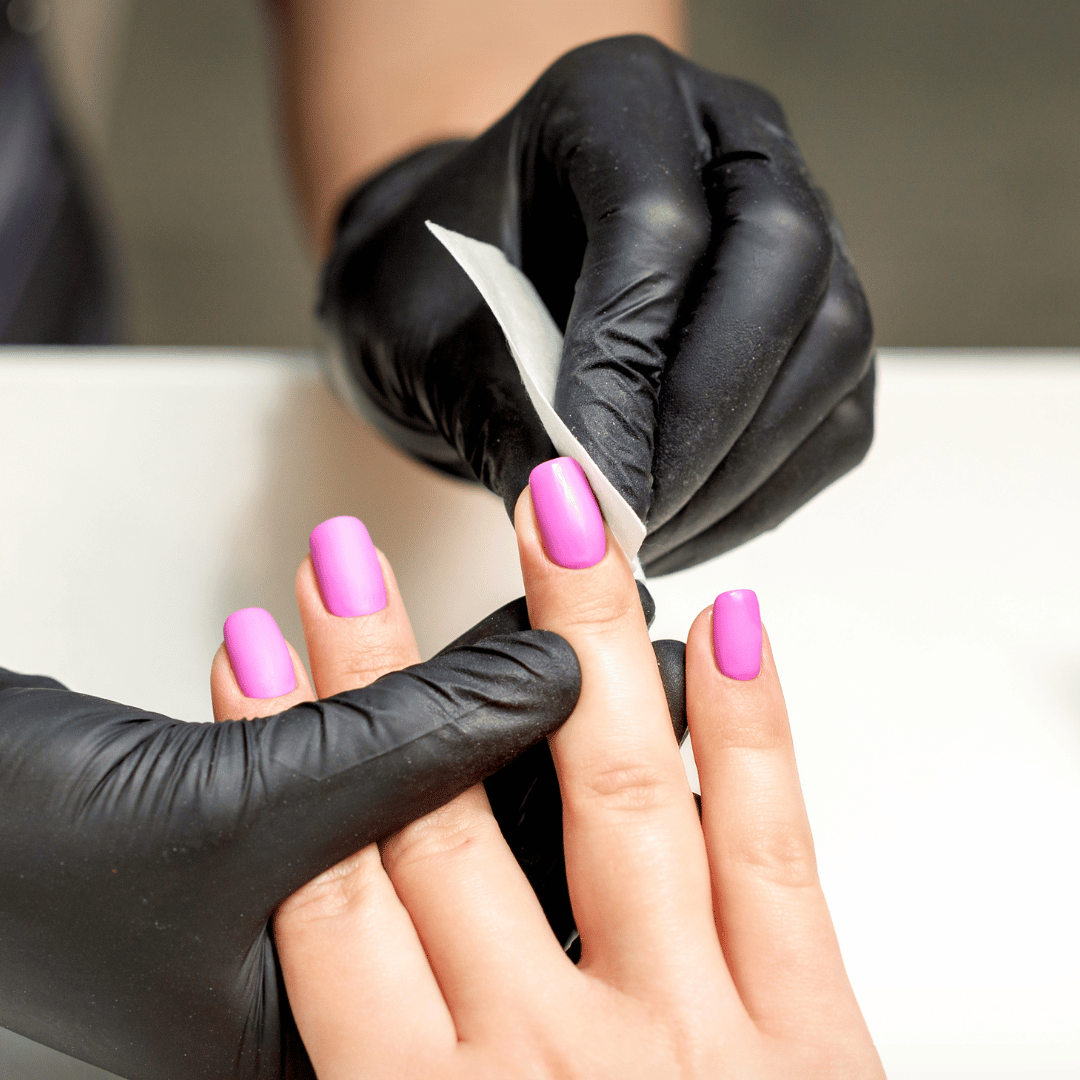
For removing nail polish and gel, disposable nitrile gloves are common but will soften with acetone contact. Change them as soon as they feel tacky or swollen, or use a latex or neoprene glove for longer soaks.
FAQ
Are nitrile gloves acetone resistant?
No. OSHA's chart rates nitrile poor for acetone. Nitrile gloves give a few seconds to minutes of splash protection at most.
What gloves are acetone proof?
No glove is fully acetone proof, but butyl rubber resists acetone longest. Replace butyl gloves when they swell, crack or feel sticky.
Does acetone melt vinyl gloves?
Acetone attacks vinyl quickly, so vinyl gloves aren't a good choice for acetone work.
Are latex gloves OK for acetone?
Natural rubber is rated well for acetone, but thin disposable latex gloves only protect briefly, and latex allergies are a concern in shared workplaces.
Conclusion
Choose butyl rubber gloves for acetone, MEK and other ketones, and avoid nitrile and vinyl. Match the glove to how long hands will be in contact, check the manufacturer's breakthrough data, and pair gloves with good ventilation and splash goggles.
Source: OSHA glove selection chart (copy hosted by Florida State University). Product details from each Harmony listing.