
Cleanroom Gowning Procedure: Donning and Doffing Steps by Class
Published by Harmony Lab & Safety Supplies on Mar 13, 2025
Updated October 2026 · Harmony Lab & Safety Supplies
Cleanroom gowning is the sequence of putting on cleanroom garments, from the top of the body down, so that each layer covers the one before and nothing touches a clean surface after it touches you. People shed skin, hair and fibers constantly, and they are one of the largest sources of contamination in any cleanroom. A good gowning procedure is the cheapest contamination control you have. This guide covers what to wear in each class, the step-by-step donning and doffing order, and the conduct rules once you are inside.
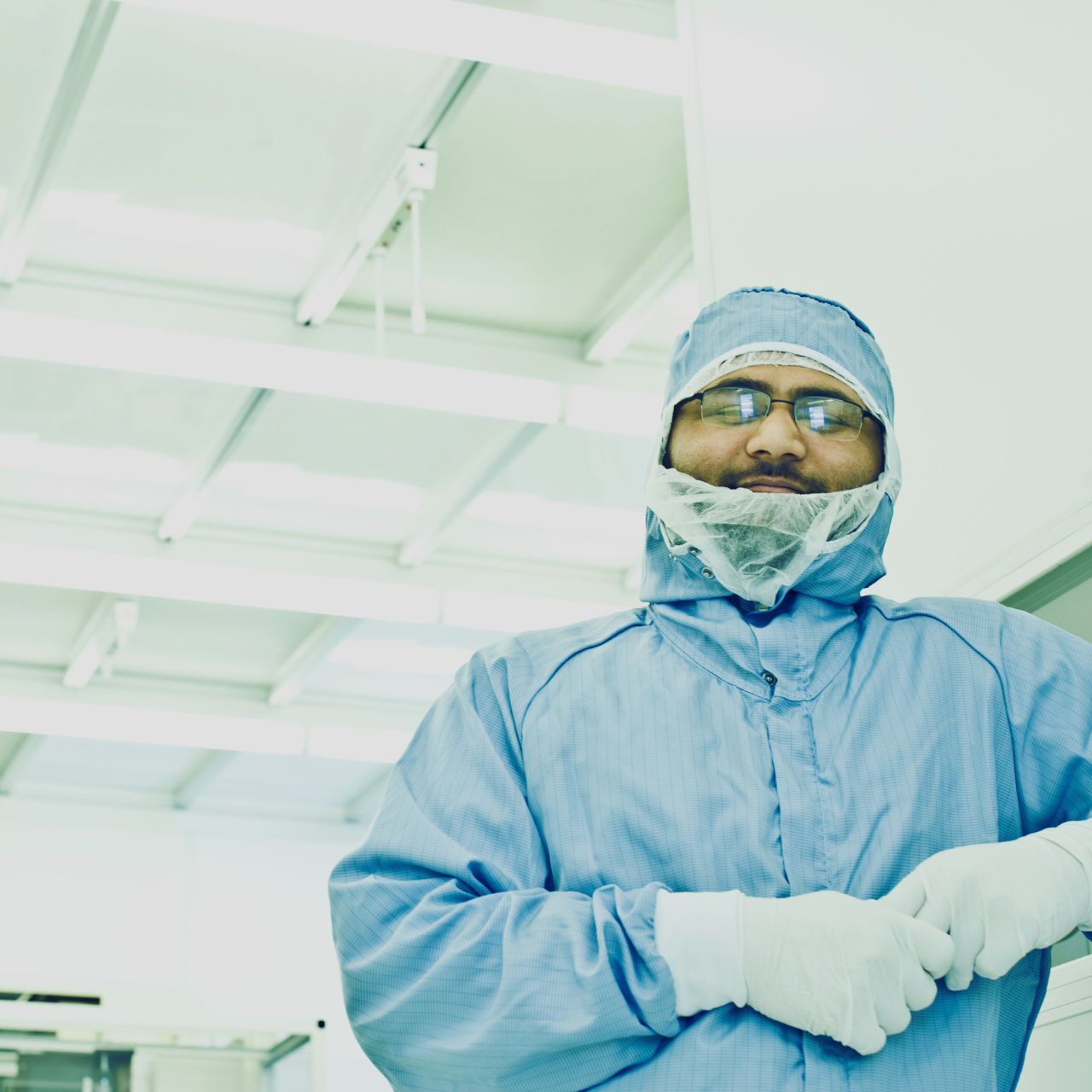
What to wear by cleanroom class
Garment requirements scale with the room’s cleanroom classification. The table shows typical practice. Your facility’s SOP takes precedence.
| Cleanroom class | Typical garments |
|---|---|
| ISO 8 (Class 100,000) | Hair cover, beard cover if needed, frock or lab coat, shoe covers, gloves |
| ISO 7 (Class 10,000) | Hair cover, hood, face mask, coverall (or frock in some facilities), boot covers, gloves |
| ISO 6 (Class 1,000) | Hood, face mask, coverall, boot covers, gloves; no exposed hair or skin |
| ISO 5 (Class 100) | Hood, face mask, goggles, coverall, boots, gloves (often two pairs); sterile garments for aseptic work |
EU GMP Annex 1 is stricter for sterile medicine manufacturing: in Grade B, and for any intervention in Grade A, headgear, face mask, eye coverings, gloves and footwear must all be sterile. For a broader overview of garment types and materials, see our cleanroom PPE guide and the full range of cleanroom apparel.
Cleanroom gowning procedure, step by step
This is the full sequence for a coverall-and-hood room (ISO 7 and cleaner). In an ISO 8 room with frocks, the sequence is shorter: hair cover, shoe covers, frock, then gloves. Gown in the order your SOP specifies, from the dirtiest zone of the gowning room to the cleanest.
- Prepare outside the gowning room. Remove jewelry, watches and makeup, and leave phones, food, drink and personal items in your locker. Use the restroom first: leaving means de-gowning.
- Wash and dry your hands. Wash with soap and water and dry thoroughly. Some sites also require a hand sanitizer.
- Put on a hair cover. A bouffant cap or hair net covering all hair, plus a beard cover for facial hair.
- Step across the tacky mat. Step on the tacky mat at the entry with each foot to lift particles from your soles.
- Put on shoe covers. Put on shoe covers or dedicated cleanroom shoes, one foot at a time, stepping over the gowning bench or line so each covered foot lands on the clean side.
- Put on the first pair of gloves. An inner pair of cleanroom gloves protects the garments from your hands while you dress.
- Put on a face mask. A cleanroom face mask covering nose and mouth, fitted at the nose.
- Put on the hood. Pull the hood over the hair cover and mask, and tuck the hood’s skirt in so it will sit under the coverall collar.
- Put on the coverall. Unfold the coverall without letting it touch the floor. Step in one leg at a time, pull it up, put your arms in and zip it fully, with the hood skirt inside.
- Put on boot covers. Pull boot covers over the coverall legs and secure the ties or snaps. Step into the clean side as each one goes on.
- Put on goggles. Where required, goggles or safety glasses go on last over the hood.
- Put on the outer gloves. Pull the second pair of gloves over the coverall sleeve cuffs so there is no gap at the wrist.
- Check in the mirror. Check for exposed hair or skin, gaps at the neck and wrists, and open zippers or snaps before you enter.
The principle behind the order is top-down: hair is covered first so nothing falls onto the garments, and the outer gloves go on last so they are the cleanest layer when you touch product or equipment.
De-gowning (doffing) procedure
De-gowning protects the next person, the garments you will reuse, and in some cases you, if you have handled hazardous materials. A common sequence:
- Remove the outer gloves. Peel them off inside out without touching the coverall with bare skin.
- Remove goggles. Handle them by the strap and place reusable eyewear in its designated bin for cleaning.
- Remove boot covers. Step out of each one onto the exit side of the bench or line.
- Remove the hood and coverall. Unzip, and roll the coverall down and off inside out, so the outer surface stays contained. Reusable garments go to their hanger or laundry bag per your SOP; disposables go in the waste bin.
- Remove the face mask. Handle it by the ear loops or ties.
- Remove the inner gloves, then the hair and beard covers. Discard them as you exit.
- Wash your hands. Finish with hand hygiene before leaving the gowning area.
Disposable garments are not reused. If you leave the cleanroom, even briefly, gown again with new disposables on the way back in, unless your SOP allows otherwise.
Rules inside the cleanroom
- Move slowly and deliberately. Fast movement pumps particles out through garment openings and disturbs the airflow. Don’t run, and don’t lean on walls or work surfaces.
- Keep your hands away from your face and your garment openings. Change gloves when they tear or touch anything outside the work area.
- Talk only when necessary. Speaking, coughing and sneezing release droplets. If you have a cold, tell your supervisor before you gown.
- No cosmetics or fragrances. Makeup, powders and hair spray shed particles and residues.
- No ordinary paper, pencils, erasers or cardboard. Use cleanroom paper, cleanroom notebooks and cleanroom pens.
- No food, drink, gum or personal electronics unless they are approved and wiped down for the room.
- Wipe tools and materials before they come in. Remove outer packaging in the airlock and wipe items with pre-saturated IPA wipes.
- Stay out of the airflow path between filters and critical work, and keep your hands and body from passing over open product.
Common gowning mistakes
- Letting the coverall or its legs touch the floor while dressing.
- Touching the outside of a garment with bare hands.
- Gaps at the wrists (gloves under the cuff instead of over it) or at the neck (hood skirt outside the coverall).
- Wrong size: garments that are too small split, and garments that are too big bunch and pump air.
- Skipping the tacky mat, or using one whose top sheet is already full.
- Reusing disposable garments, or wearing cleanroom garments outside the cleanroom area.
Training and qualification
Gowning is a skill that drifts without practice. Write the procedure as an SOP with photos, post it in the gowning room, and observe new staff until they gown correctly every time. Pharmaceutical sites under EU GMP Annex 1 must restrict unsupervised access to Grade A and B areas to people who have passed a gowning assessment, and must retrain and requalify anyone who fails. Cleaning the room is the other half of contamination control: see our cleanroom cleaning procedure.
Frequently asked questions
What is the correct order for cleanroom gowning?
Top to bottom: hair cover, shoe covers, inner gloves, face mask, hood, coverall, boot covers, goggles, then outer gloves over the coverall cuffs. Your facility’s SOP may vary the order.
Why do you wear two pairs of gloves in a cleanroom?
The inner pair keeps your hands off the garments while you dress. The outer pair goes on last, over the sleeve cuffs, so it is the cleanest layer and closes the gap at the wrist.
Can you reuse cleanroom garments?
Disposable garments are single use. Reusable garments are laundered by a cleanroom laundry and replaced at a set frequency or when damaged, as set by your procedures.
Can you wear makeup in a cleanroom?
No. Cosmetics shed particles, and most cleanroom SOPs ban them along with fragrances and hair products.
Related guides
- Cleanroom classifications: ISO classes, FS 209E and EU GMP grades
- Cleanroom cleaning and disinfection procedure
- A guide to cleanroom PPE
- What is a cleanroom?
Sources
- EU GMP Annex 1, Manufacture of Sterile Medicinal Products (2022), section 7 (Personnel)
- IEST-RP-CC003, Garment System Considerations for Cleanrooms and Other Controlled Environments
- ISO 14644-1:2015, Classification of air cleanliness by particle concentration