
What Is a Cleanroom? How It Works, Why It Matters, and What It Requires
Published by Harmony Lab & Safety Supplies on Apr 02, 2026
What Is a Cleanroom? How It Works, Why It Matters, and What It Requires
A cleanroom is a controlled environment designed to limit airborne particles and other contaminants that could affect products, processes, or research. These spaces are essential in industries where contamination can damage sensitive components, compromise sterile production, reduce product quality, or create process risk.
But a cleanroom is more than just a clean-looking room. It is a carefully managed environment that relies on controlled airflow, filtration, pressure, apparel, wipes, masks, and cleaning protocols to maintain a consistent contamination-control standard.
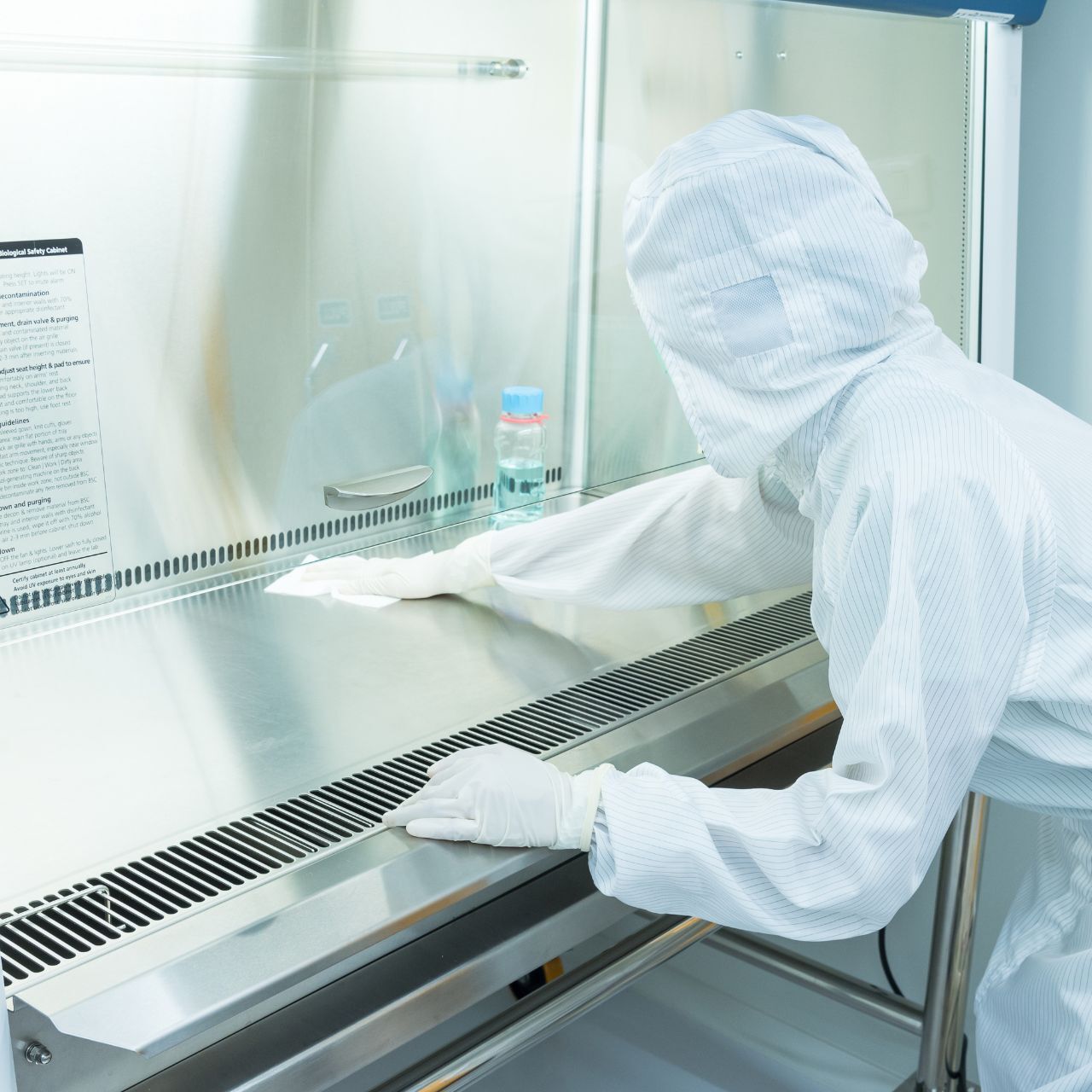
What Is a Cleanroom?
At its core, a cleanroom is a controlled environment built to reduce contamination. The main goal is to limit airborne particles, microbes, aerosols, and other contaminants that could interfere with manufacturing, testing, assembly, or research.
A controlled environment built to reduce contamination
Unlike ordinary workspaces, cleanrooms are designed to maintain strict environmental control. This is especially important in industries where even small amounts of contamination can cause product defects, inaccurate results, or safety concerns.
What cleanrooms control besides particles
Cleanrooms often control more than particle counts alone. Depending on the application, they may also regulate airflow, pressure, temperature, humidity, and the movement of people and materials through the space.
How Does a Cleanroom Work?
A cleanroom works by continuously controlling and reducing contamination inside the environment. That usually starts with filtered air, but it also depends on how people, surfaces, and materials are managed inside the room.
HEPA and ULPA filtration
Cleanrooms typically use HEPA or ULPA filtration systems to remove particles from the air. These filters help maintain the low-particle environment needed for sensitive manufacturing and controlled processes.
Positive pressure and airflow control
Many cleanrooms operate under positive pressure, which helps prevent unfiltered outside air from entering the space. Controlled airflow also helps push contaminants toward return air systems so they can be removed and filtered out.
Why people, surfaces, and materials must also be controlled
Filtration alone is not enough. Personnel, tools, packaging, consumables, and cleaning methods all affect contamination levels. That is why cleanrooms also require specific procedures, apparel, masks, wipes, and handling practices.
Cleanroom Classifications and Standards
Cleanrooms are classified according to how many airborne particles are allowed within a given volume of air. The stricter the environment, the lower the allowable particle count.
What ISO 14644-1 means
ISO 14644-1 is the internationally recognized standard used to classify cleanrooms by air cleanliness. It provides the framework for understanding how controlled an environment must be for different applications.
Why particle counts matter
In sensitive manufacturing and research environments, even small airborne particles can interfere with products, damage components, or compromise results. That is why cleanroom classification matters so much.
How stricter cleanrooms require stricter controls
As cleanroom classification becomes more stringent, the requirements for airflow, filtration, apparel, cleaning materials, and operating procedures generally become stricter as well.
For a deeper look at cleanroom classes and contamination-control guidance, see our resource on cleanroom standards and cleaning protocols.
Who Needs a Cleanroom and Why?
Cleanrooms are essential in industries where contamination can directly affect quality, safety, reliability, or research accuracy.
Pharmaceutical and biotech production
Pharmaceutical and biotech environments rely on cleanrooms to support contamination-sensitive manufacturing and processes where product integrity is critical.
Medical device and laboratory environments
Medical device manufacturers and laboratories use cleanrooms to reduce contamination risk, improve consistency, and protect sensitive testing or assembly work.
Electronics, semiconductor, and optics manufacturing
In electronics, semiconductor, and optics environments, even tiny particles can cause defects, reduce yield, or damage highly sensitive surfaces and components.
Aerospace and precision manufacturing
Aerospace and other precision manufacturing environments often require contamination control because reliability and surface integrity are essential to final performance.
Why Cleanrooms Matter
Cleanrooms matter because contamination can create expensive and sometimes dangerous consequences.
Product quality
Controlled environments help reduce defects, improve consistency, and protect final product quality.
Process reliability
When contamination is controlled, manufacturing and testing processes are more repeatable and reliable.
Worker and patient safety in regulated settings
In healthcare-related, laboratory, and regulated production settings, contamination control can also support broader safety and compliance goals.
Reduced contamination risk and fewer costly failures
For many organizations, cleanrooms are a practical investment in reducing rejects, protecting research, and avoiding failures caused by environmental contamination.
What Does a Cleanroom Require?
A cleanroom is not maintained by airflow alone. It also depends on the right supporting products and consumables.
Cleanroom apparel
Cleanroom apparel helps reduce the introduction of particles and contaminants from personnel entering the environment.
Cleanroom face masks
Cleanroom face masks help support contamination control by limiting particle release from breathing, talking, and facial movement.
Cleanroom wipes and consumables
Cleanroom wipes and related consumables are essential for controlled cleaning, spill pickup, and surface preparation inside cleanrooms.
Cleaning protocols and maintenance supplies
Maintaining a cleanroom requires consistent procedures and the right materials. That is why standards and cleaning protocols matter just as much as the room itself.
Types of Cleanrooms
Cleanrooms can be designed in different ways depending on the process, facility, and level of flexibility needed.
Modular cleanrooms
Modular cleanrooms offer flexibility and can often be reconfigured or adapted more easily as process needs change.
Permanent cleanroom installations
Permanent cleanrooms are often built as part of a dedicated production, laboratory, or research facility where long-term contamination control is a core requirement.
How cleanroom type depends on process and facility needs
The right cleanroom type depends on factors such as process sensitivity, available space, long-term use, and whether the environment needs to expand or evolve over time.
Cleanroom Supplies That Help Maintain Control
Once a cleanroom is in place, day-to-day contamination control depends on the right supporting supplies.
- Cleanroom supplies for ongoing contamination-control needs
- Cleanroom apparel for personnel protection and particle control
- Cleanroom face masks for cleaner entry and work practices
- Cleanroom wipes and wipe-selection guidance for cleaning and surface preparation
Where to Learn More About Cleanroom Standards and Cleaning
If you are building or maintaining a controlled environment, the next step is usually learning more about standards, protocols, and the consumables used inside the cleanroom.
- Learn about cleanroom standards and cleaning protocols
- Explore our cleanroom wipes guide
- Browse cleanroom supplies
Frequently Asked Questions About Cleanrooms
What is the purpose of a cleanroom?
The purpose of a cleanroom is to reduce contamination so sensitive manufacturing, testing, assembly, or research can be performed more safely and reliably.
How does a cleanroom work?
A cleanroom works through controlled airflow, filtration, pressure management, and contamination-control procedures involving people, surfaces, and materials.
What is ISO 14644-1?
ISO 14644-1 is the internationally recognized standard used to classify cleanrooms by airborne particle concentration.
Who needs a cleanroom?
Industries such as pharmaceuticals, biotech, medical device manufacturing, electronics, semiconductor production, aerospace, optics, and laboratories often require cleanrooms.
What supplies are used in a cleanroom?
Common cleanroom supplies include wipes, apparel, face masks, gloves, cleaning materials, and other contamination-control consumables.
What is the difference between a cleanroom and a controlled environment?
A cleanroom is a specific type of controlled environment with defined cleanliness and contamination-control requirements. Controlled environments may include a broader range of spaces with varying levels of control.
Final Recommendation
Cleanrooms are essential wherever contamination control affects product quality, research accuracy, or operational safety. But a cleanroom is not just a room with filtered air — it also requires the right apparel, wipes, masks, supplies, and cleaning protocols to maintain performance.
If you are supporting a controlled environment, the best next step is to explore the cleanroom products and educational resources that help maintain contamination control every day.
Start here: