




Description
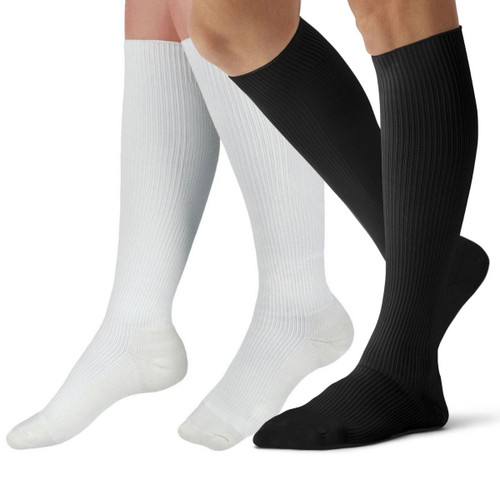
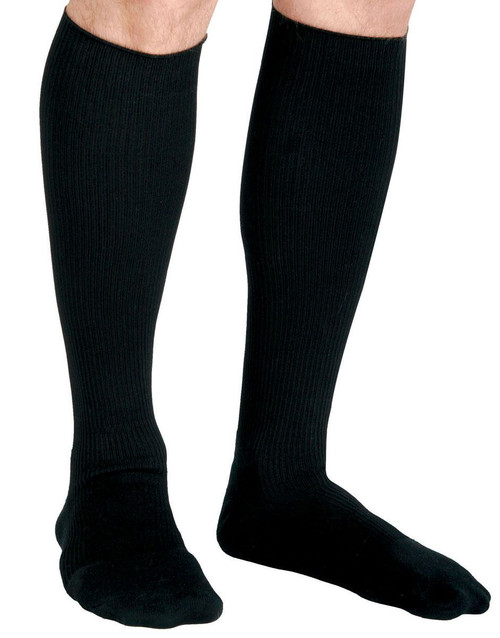
Medline CURAD Cushioned Compression Hosiery, Knee High, 30-40 mmHg, 1 pair
Hospital-quality compression hosiery constructed from soft, sheer nylon and spandex provide gentle support plus light, graduated compression to the lower legs to maintain blood flow and reduce discomfort and swelling. 30-40 mmHg level of compression provides firm support for severe varicosities, severe swelling, mangaement of active ulceration, following deep vein thrombosis, post-surgery. Knee length, unisix fit, with closed toe. Available in tan and black.
- Knee-high compression hosiery are specifically designed to apply pressure to the leg to help maintain blood flow and reduce discomfort and swelling in the ankles and calves.
- 30-40 mmHg firm compression. This stronger compression level is recommended for leg health symptoms that range from moderate to severe. The 30–40 mmHg level of compression is recommended for patients with a blood clot, deep vein thrombosis (DVT) or lymphedema.
- Graduated compression. The amount of compression in the stocking gradually changes—the highest amount of pressure occurs at the ankle and gradually decreases up the length of the stocking.
- Unisex fit made from a nylon and spandex blend.
- Sizing:
- Please refer to the size guide in the product images.
- Precise measurement = accurate measurement = comfortable fit.
- If between sizes, size up on circumference and size down on leg length.
- Try to measure first thing in the morning when swelling is at a minimum to help you get the most accurate fit.
- If not in the morning, elevate feet for 30 minutes before measuring.
- Measure around the ankle at the narrowest point (just above the ankle bone), and around the widest part of your calf.
- Packaged 1 pair of black or white compression hosiery.
What's the difference between compression socks and compression stockings/hosiery?
Compression socks are also referred to as compression stockings or compression hose. The main difference between the two is based on the design and the material used in the design. Functionally, they work in the same way and there are no differences in the pressure rating for compression socks or compression stockings.