
Types of Disposable Gloves and Their Purposes
Published by Harmony Lab & Safety Supplies on Mar 14, 2025
Types of Disposable Gloves and Their Various Purposes
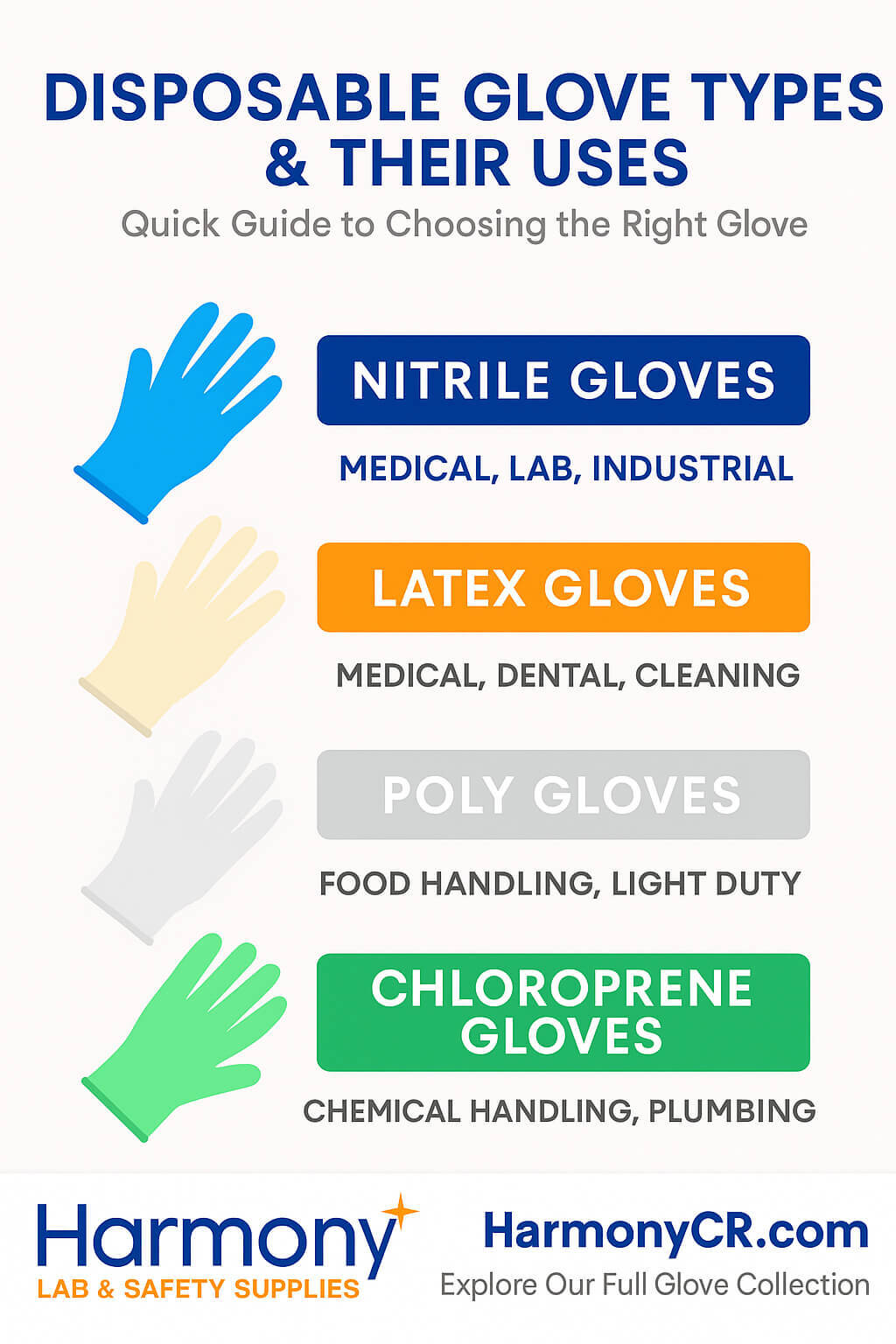
As someone who regularly speaks with people across industries requiring disposable gloves, I know firsthand how important it is to choose the right type of glove for the job.
Disposable gloves are essential in maintaining hygiene and preventing the spread of infection, but with so many types of gloves available, it can be overwhelming to choose the right one.
In this article, I will discuss the different types of disposable gloves and their various purposes to help you make an informed decision.
Introduction to Disposable Gloves
Disposable gloves are single-use gloves made of various materials that protect the wearer’s hands from hazardous materials or infectious agents.
They are used in various industries, including healthcare, food service, and manufacturing.
Disposable gloves come in different sizes, colors, and materials, each designed for specific purposes. Choosing the correct type of glove for the job is essential to ensure maximum protection for the wearer.

⭐ Staff Pick: Raven InVue Hi-Viz Nitrile Exam Gloves
Bright visibility meets tough protection. These 7 mil thick nitrile gloves are ideal for medical, safety, or industrial use. Loved by our team—and customers—with a 4.9-star rating from 10 reviews. Now just $13.99 (was $14.99). All sizes in stock. Ships Fast.
Shop NowPurpose of Disposable Gloves
The primary purpose of disposable gloves is to protect the wearer’s hands from harmful substances or infectious agents. They are also used to prevent cross-contamination between different surfaces or people.
Disposable gloves are widely used in healthcare settings to prevent the spread of infection and in the food service industry to prevent contamination of food products.
General Purpose Glove Uses
General-purpose gloves are commonly used in the automotive, janitorial, and beauty industries. These gloves are made of various materials, such as latex, nitrile, vinyl, or polyethylene.
They are designed for general use and provide essential protection against common hazards found in household and work settings.
- Food Service
- Gardening
- Household Chores
- Janitorial
- Salons/Spas
- Automotive
Latex gloves are popular for general-purpose use due to their affordability and flexibility. However, they are not suitable for people with latex allergies.
Nitrile gloves are an excellent alternative to latex gloves, as they are latex-free and provide excellent protection against various chemicals. The material provides enhanced protection from chemicals, cuts, and abrasions, making it useful for labs and automotive repair shops.
Vinyl gloves are a low-cost option for general use but are less durable than latex or nitrile gloves. Polyethylene gloves are the most affordable option and are commonly used for light-duty tasks. Both plastic polyethylene and vinyl are suitable for fast-paced food service counters and delis.
Medical Exam Glove Uses
Medical exam gloves are used in healthcare settings to prevent the spread of infection. These gloves are made of high-quality materials that protect against infectious agents. Medical exam gloves are available in different sizes and thicknesses to accommodate various hand sizes and protection needs.
- General Medical Gloves for Examinations
- Sterile Medical Gloves for Surgery
- Chemotherapy Certified Medical Gloves
Nitrile gloves are the most commonly used medical exam gloves due to their excellent chemical resistance and barrier protection. Latex gloves are also used in healthcare settings but are unsuitable for people with latex allergies. Vinyl gloves are a cost-effective option making them ideal for vaccine administration.
Different industries have specific requirements for disposable gloves.
Food Handling
The food service industry requires gloves that are FDA approved for food contact and are powder-free to prevent contamination.
Healthcare
The healthcare industry requires gloves that meet specific ASTM standards and are suitable for medical use.
Janitorial
Cleaning gloves require specific chemical resistance to prevent abrasions and tears during industrial, commercial, and household cleaning. Chloroprene rubber provides the best chemical resistance of disposable glove materials.
Types of Disposable Gloves
There are five main types of disposable gloves: latex, nitrile,chloroprene, vinyl, and polyethylene. Each type of glove has its own unique properties and is designed for specific purposes.
Latex gloves are made from natural rubber and provide excellent flexibility and comfort. They are commonly used in industries such as healthcare, food service, and janitorial. However, they are not suitable for people with latex allergies.
Nitrile gloves are made from synthetic rubber and provide excellent chemical resistance and barrier protection. They are commonly used in industries such as automotive, manufacturing, and healthcare.
Vinyl gloves are made from polyvinyl chloride (PVC). They are commonly used in industries such as food service, janitorial, and beauty. Price increases and uncertanties around tarifs have led to increases in vinyl gloves pricing, making them a less attractive option than nitrile or latex.
Polyethylene gloves are the most affordable option and are commonly used for light-duty tasks such as food handling and cleaning. Most sandwich shops and delis utilize these gloves. Prices are around a penny each when buying in bulk.
Chloroprene gloves have a unique chemical resistance profile. Commercial cleaning crews, plumbers, and lab technicians may use chloroprene when working with particular solvents.
Differences Between Each Type of Glove
Each type of disposable glove offers unique advantages based on material composition, comfort, and use case. However, recent changes in global supply chains and tariffs have impacted pricing, reshaping which gloves offer the best value.
Latex Gloves
Latex gloves offer superior comfort, flexibility, and tactile sensitivity, making them a top choice for medical and industrial applications. However, due to rising material and fuel costs, their use has declined in favor of alternatives. Latex is now generally slightly more expensive than nitrile.
Nitrile Gloves
Nitrile gloves are the most popular alternative to latex, offering excellent puncture resistance and chemical protection. Once considered more expensive, nitrile gloves are now competitively priced—often matching or even undercutting latex—making them ideal for healthcare, lab work, and industrial settings.
Vinyl Gloves
Vinyl gloves were once the most budget-friendly option, but recent tariff-related price increases have made them nearly as expensive as nitrile gloves—without the same durability or protection. As a result, they are less commonly used in medical environments and more suited for low-risk, short-duration tasks.
Nitrile-Vinyl Blends
Nitrile-vinyl hybrid gloves combine the affordability of vinyl with some of the strength of nitrile. They’re a common compromise in healthcare and food service settings where latex-free materials are required by regulation.
Plastic (Polyethylene) Gloves
Polyethylene gloves are inexpensive and loose-fitting, ideal for quick food handling tasks in delis, cafeterias, and fast-casual restaurants. They are not recommended for tasks requiring precision or protection from contaminants.
Chloroprene Gloves
Chloroprene (also known as neoprene) gloves offer chemical resistance and flexibility, making them suitable for plumbing, janitorial work, and handling certain solvents. They’re a reliable option when nitrile is not ideal.
Factors to consider when choosing disposable gloves
When choosing disposable gloves, there are several factors to consider. These include the type of task being performed, the level of protection required, and the wearer’s allergies or sensitivities.
- Latex allergies
- Comfort
- Thickness
- Industry Requirements
It is important to choose gloves that provide adequate protection for the task at hand and are suitable for the wearer’s needs.
Wholesale Disposable Glove Options
If you need to purchase disposable gloves in bulk, there are several wholesale options available. Many online retailers offer bulk discounts on disposable gloves, making it more affordable to purchase them in large quantities. It is important to choose a reputable supplier that offers high-quality gloves at a competitive price.
Proper disposal of disposable gloves
Disposable gloves should be disposed of properly to prevent the spread of infection. Gloves should be removed carefully and disposed of in a designated waste container. It is important to wash your hands thoroughly after removing gloves to prevent the spread of germs.
Conclusion
Disposable gloves are an essential part of maintaining hygiene and preventing the spread of infection. Choosing the right type of glove for the job is crucial in ensuring maximum protection for the wearer. By understanding the different types of disposable gloves and their various purposes, you can make an informed decision when selecting gloves for your specific needs. Whether you need gloves for general use or medical purposes, there is a type of glove that is suitable for your needs.