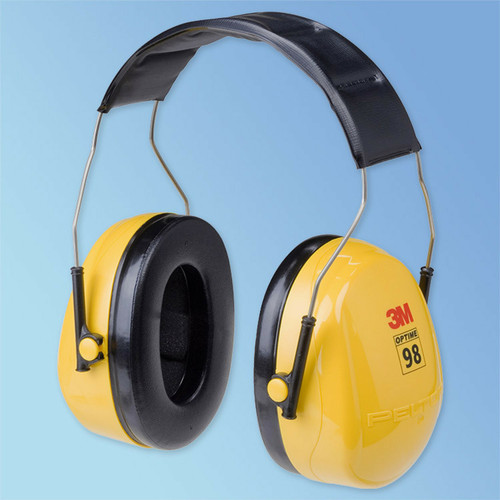
To comply with OSHA occupational noise exposure standards, companies must limit the amount of noise any worker is exposed to on the job. For most applications, a single layer of hearing protection will be sufficient. However, double hearing protection may be necessary under certain conditions.
The first step is to know your employees' noise levels daily. Workplace noise measurements are dependent on the specifics of your workplace. Generally, an employee will wear a dosimeter during their shift. The dosimeter measures noise exposure and if you find workers are exposed to an average above 85 decibels (dB) over eight hours, then double hearing protection may be helpful along with a required hearing conservation program.
In an environment above 100 dB, OSHA rules encourage double hearing protection. Some industry-specific requirements have a lower standard, requiring double protection above 105 dBa, but OSHA’s guidelines are the safest. To comply with all regulations, it is best to provide double hearing protection when workplace noise levels exceed 100 dBa in an 8-hour weighted average.
Double Hearing Protection provides a 4 to 8 dB boost, on top of the normal parameters of the ear muffs, for example. Providing ear plugs with ear muffs can reduce noise by an additional 85%, significantly reducing noise-related injuries. The most common form of double hearing protection is using ear plugs with ear muffs.
For any noise reduction device (earplugs, ear muffs), a Noise Reduction Rating (NRR) is provided. Peltor Optime 105 Headband Ear Muffs, for example, have an NRR rating of 30.
To determine how NRR rating affects dB, take the NRR number to subtract 7, and divide that number by 2.
In our example: (30 – 7) / 2 = 11.5
A worker wearing Peltor Ear Muffs with a 30 NRR will experience an 11.5 dBa reduction in noise. If your workers are exposed to 100 dBa, then with the earmuffs, they will be exposed to 88.5 dBa.
Double protection through 3M Classic Ear Plugs will provide an additional 5 dB of protection if your workplace requires more. By themselves, 3M earplugs have an NRR rating of 29, but when doubled with Peltor Ear Muffs, an additional 5 dB is added to the highest rating.
For most workspaces, noise must be below 90 dB over eight hours. However, if your worker experienced STS hearing loss, then more is necessary. To determine if your employee suffered a Standard Threshold Shift (STS), answer three questions:
Under OSHA Guidelines, hearing loss cases assume that the loss occurred at work. The burden of proof lies with employers to prove otherwise.
Hearing loss aggravated by a work environment classifies as work-related hearing loss.
If you answered yes to each question above, then more hearing protection is required for that employee. An additional 5 dB of protection will put you in compliance and protect your employees from further hearing loss. What Noise Exposure is Ideal?
Just as too little noise exposure is dangerous, so is the opposite. Excessive noise reduction can cause accidents related to an inability to hear colleagues, alarms, and a general lack of awareness. Hearing protection may be unreasonable if a worker needs to remove it to listen to their equipment or converse with a colleague.
Ideally, reduce noise to reduce the exposure to 75 – 85 dB. The CDC recommends a single layer of ear protection for workplaces with noise levels below 100 dB. Above 100 dB, a dual protection layer may be required to reach the ideal workplace noise exposure.
The quirks of your workplace will determine which hearing protector is best. Only choose hearing protection that allows employees to wear them comfortably and adequately for extended periods. Here are the main differences:
Ear Muffs
Ear Plugs
Ear plugs are the choice of most employees. However, make sure to train them properly on how to insert earplugs. If earplugs cannot be inserted properly, then earmuffs should be used.
Workplace noise levels only have to be re-evaluated when noise exposure increases beyond what your current protection allows. Annual training should include information on the types of protection provided, fit, and use. If you have any questions about whether you have the right hearing protection, reach out to our team. Harmony Lab & Safety Supplies is your trusted hearing protection equipment and safety gear source.